Learn · walkthrough
Research a Fund Manager in Ten Minutes
Published · 8 min read
Every quarter, the 500 largest investment managers disclose their US stock books in a holdings report filed with the SEC. Moneyta ingests those filings and turns each manager into a page you can actually read. This walkthrough takes one manager from search box to verdict. Berkshire Hathaway is the example throughout; every step works for any filer in the directory. If these filings are new to you, start with our whale watching explainer and come back.
Step 1: find your manager
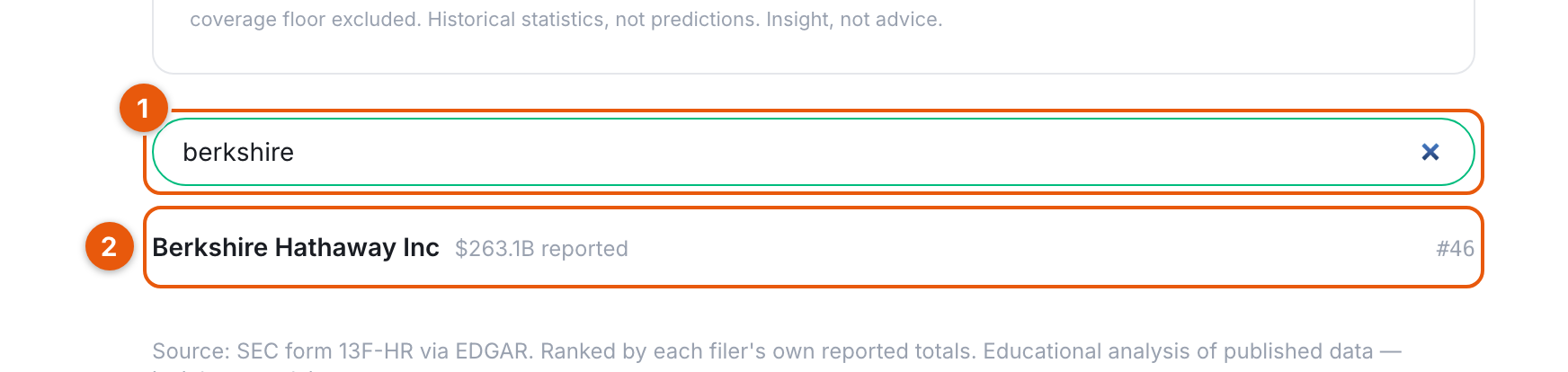
Open Fund Managers in the site navigation, or go straight to moneyta.co/institutions. No account is needed for this page. Type a name fragment into the search box (1); the directory filters as you type and shows each filer's self-reported book size and rank. Click the row (2) to open the manager's page.
Step 2: read the book
The manager page opens with the whole story above the fold. The first card (1) is the disclosed US stock book from the latest filing. The "This quarter" card (2) counts positions opened and exited since the prior filing. Below them, the top 10 holdings table (3) lists the largest positions with the value the filer reported.
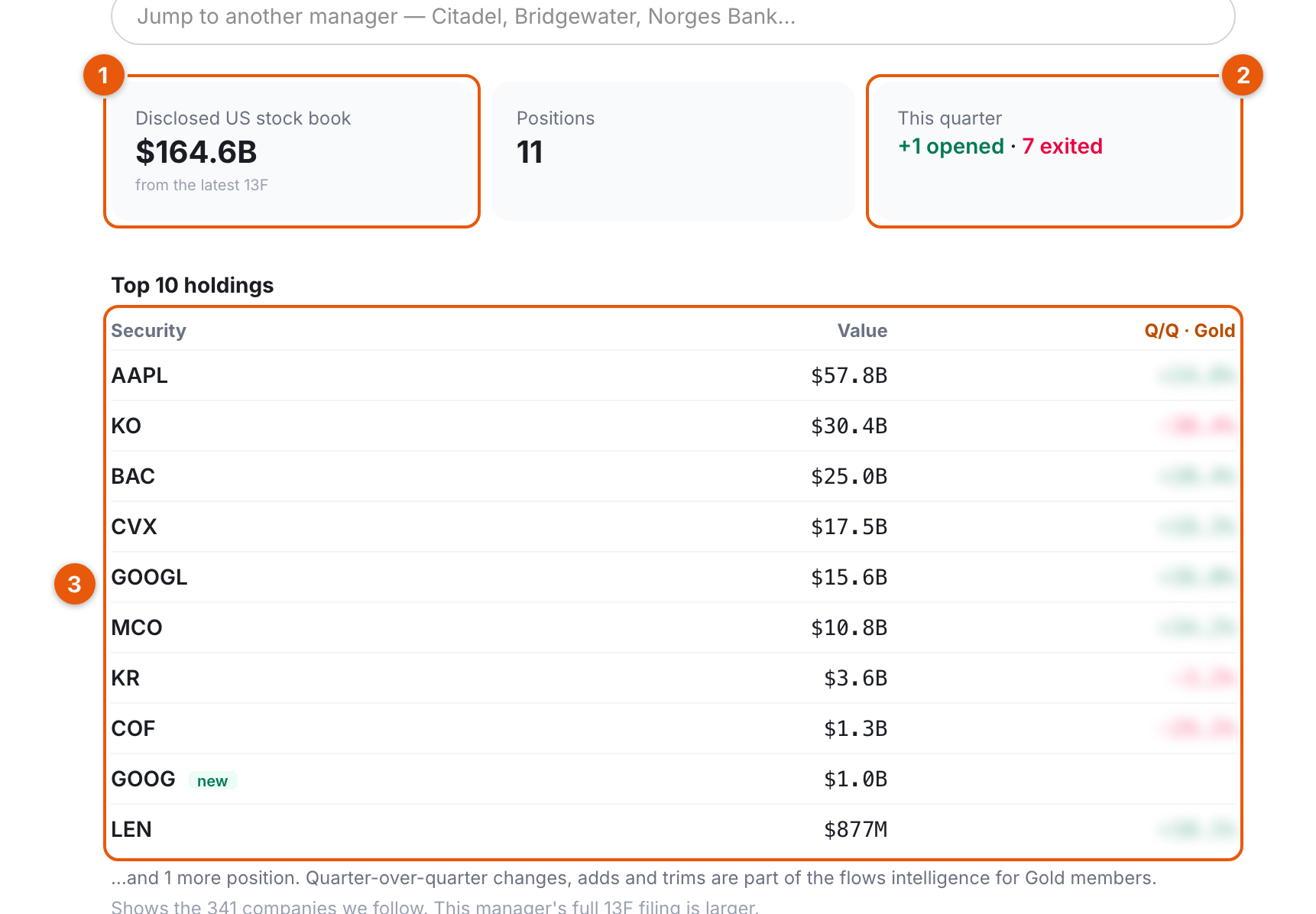
Three honesty notes before you read further. The filing shows disclosed long US positions only, not the fund's complete portfolio. Filings arrive up to 45 days after quarter end, so the book you are reading is always weeks old. And option rows show the notional value the SEC requires, not what the manager paid, so a put row is bearish exposure that reads deceptively large.
Step 3: read the quarter's changes
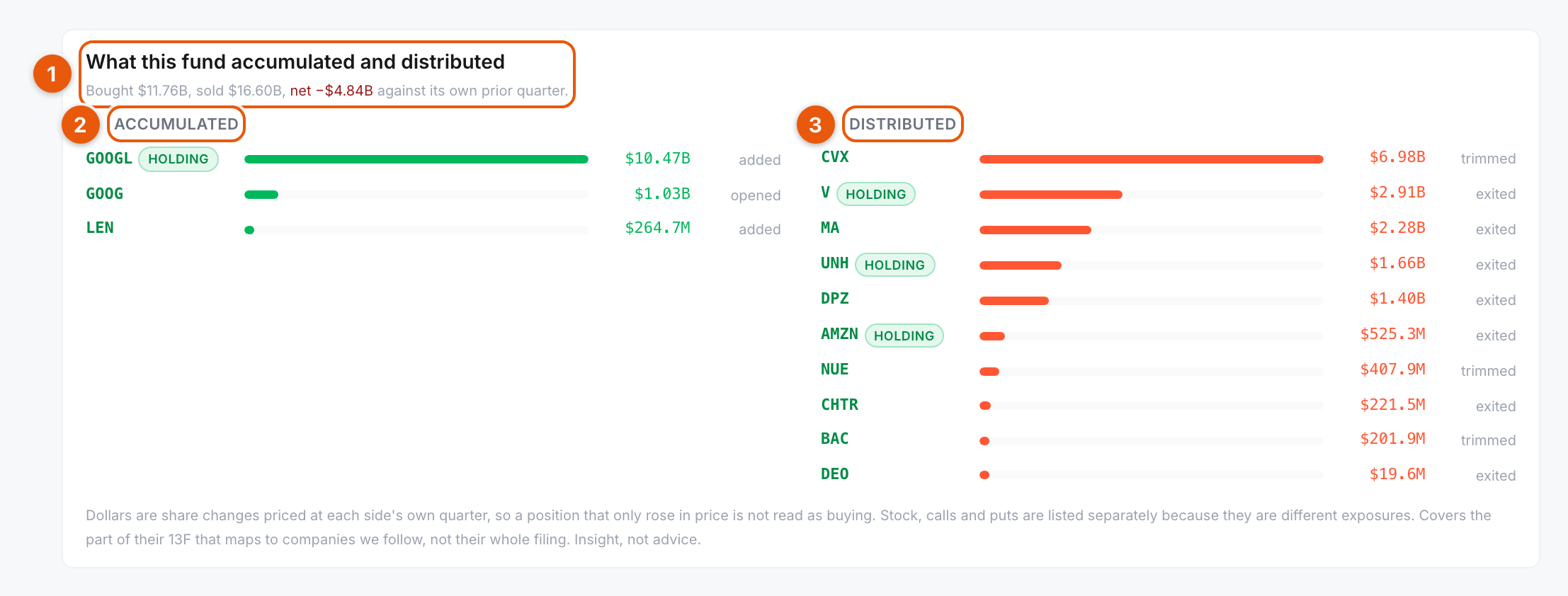
Members find the deeper version under Research → Institutions: search the same manager there and open the flows section. The header line (1) nets the quarter out: dollars bought, dollars sold, and the net change against the manager's own prior quarter. The accumulated column (2) shows what they added or opened; the distributed column (3) shows what they trimmed or exited, with a holding badge marking names they still own.
Step 4: check the track record
The question that matters is not what a famous manager holds. It is whether following their disclosures would ever have worked. The track record section answers it with a replay: every quarter since 2020, buy the disclosed book the day after it was filed, hold until the next filing, and measure against the S&P 500 over the same days. The verdict banner (1) states the annualized result at that real 45-day delay. The tiles (2) split it into what following earned, what the index did over the same windows, and the worst drawdown along the way. Expand "Quarter by quarter" (3) to see every window.
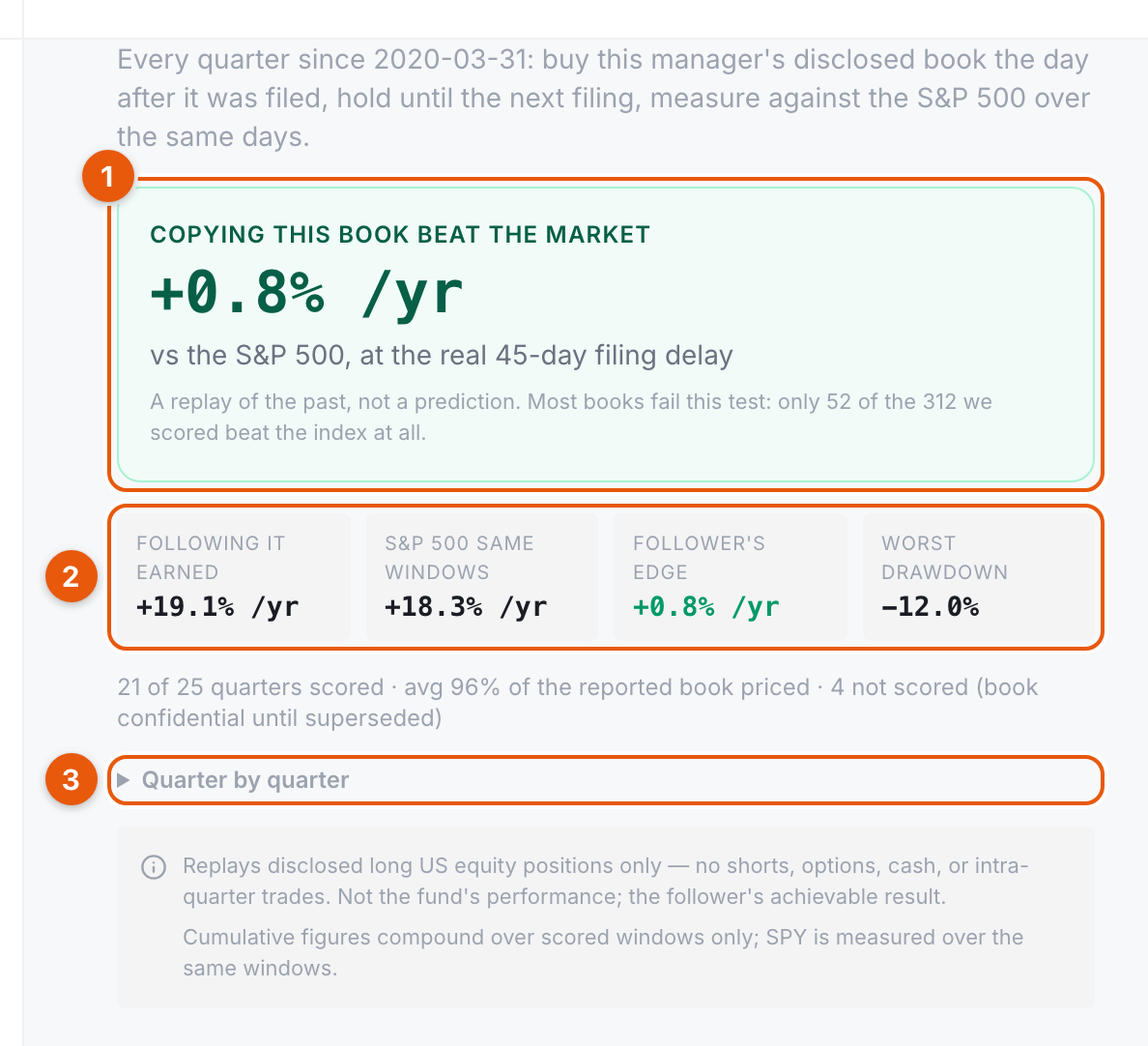
Read the fine print the way the page itself does. This is a replay of the past, not a prediction. It covers disclosed long US positions only, with no shorts, options, cash, or intra-quarter trades, so it is the follower's achievable result, not the fund's performance. And most books fail this test: in our current run, only 52 of the 312 books scored beat the index at all. A famous name with a negative followable number is one of the most useful facts this product produces.
What you now know
- What the manager disclosed, and how much of it you can see.
- What they actually did last quarter, priced honestly.
- Whether copying their disclosures ever beat an index fund, at the delay you would really face.
That last number is the one nobody else computes, and it is the reason this walkthrough ends at the track record rather than the holdings list. Educational analysis of published data. Insight, not advice.