
Blog
Plain-English writing on portfolio health, risk, and the craft of watching your own money.
Three Ways to Look at One Portfolio
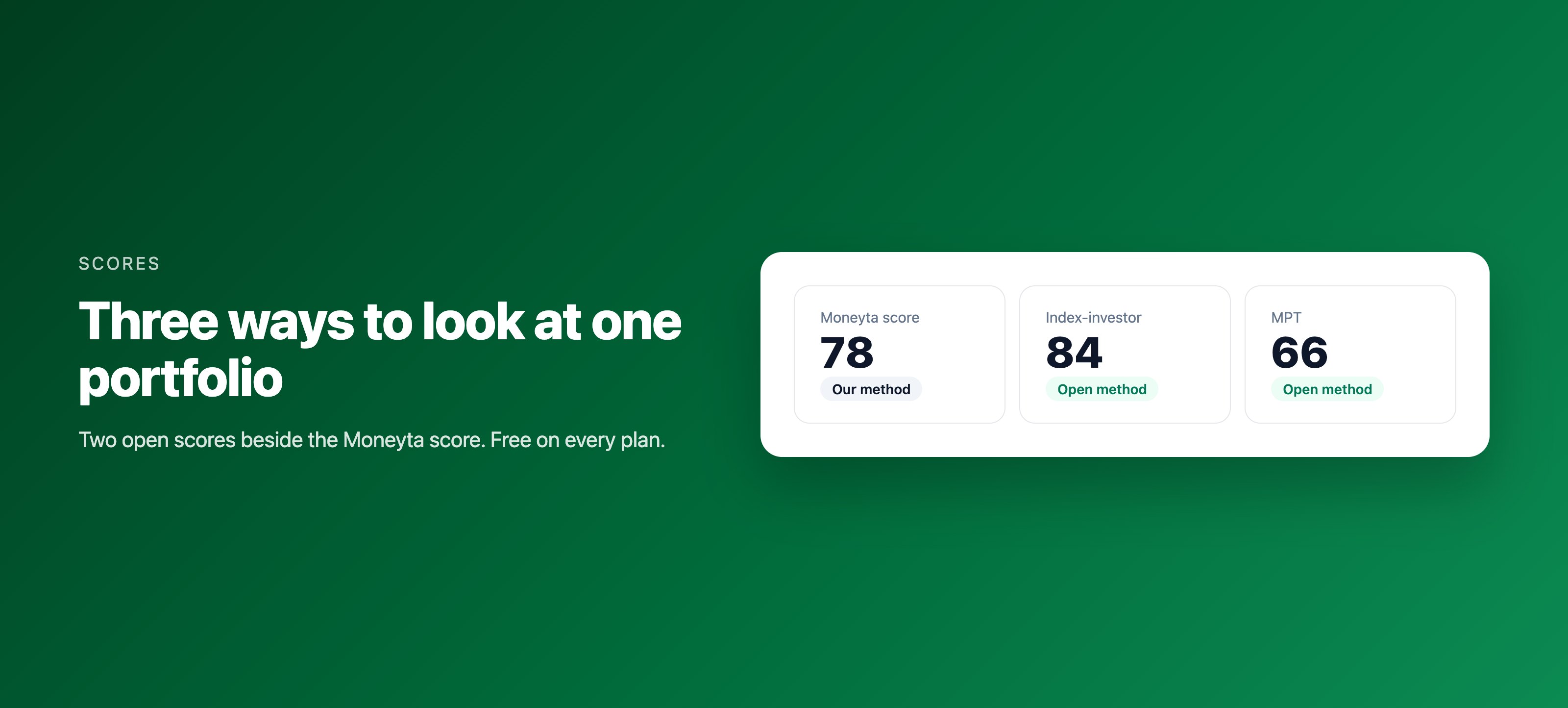
Your Moneyta score now has two companions: an index-investor score and an MPT score. Both are free on every plan, both publish their whole method, and both show you exactly how they got your number.
When a Manager You Follow Trades a Stock You Own
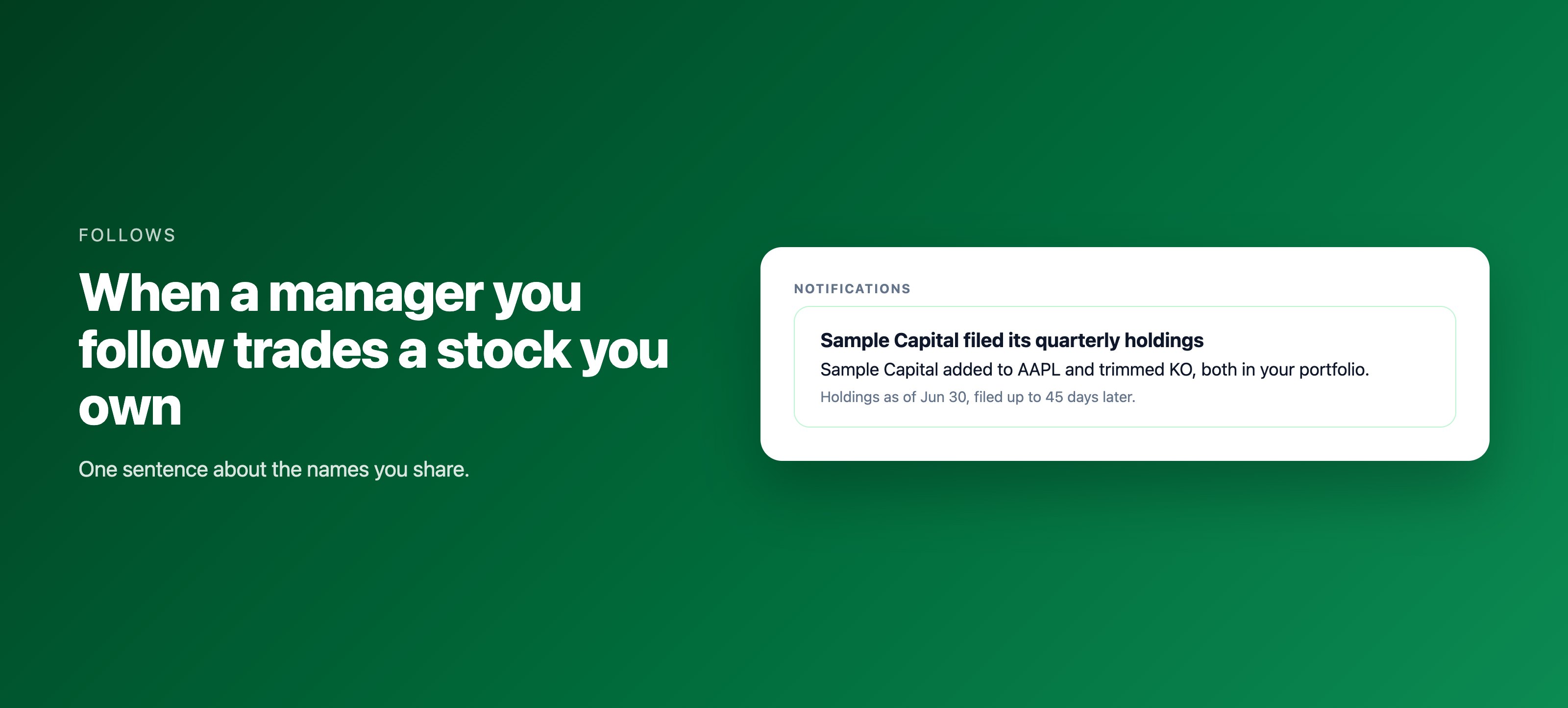
Following a fund manager used to tell you they filed. Now it tells you what they did with the stocks you hold, in one sentence, and your follows page shows which of your holdings each manager owns.
The Purchase Date Your Broker Knows
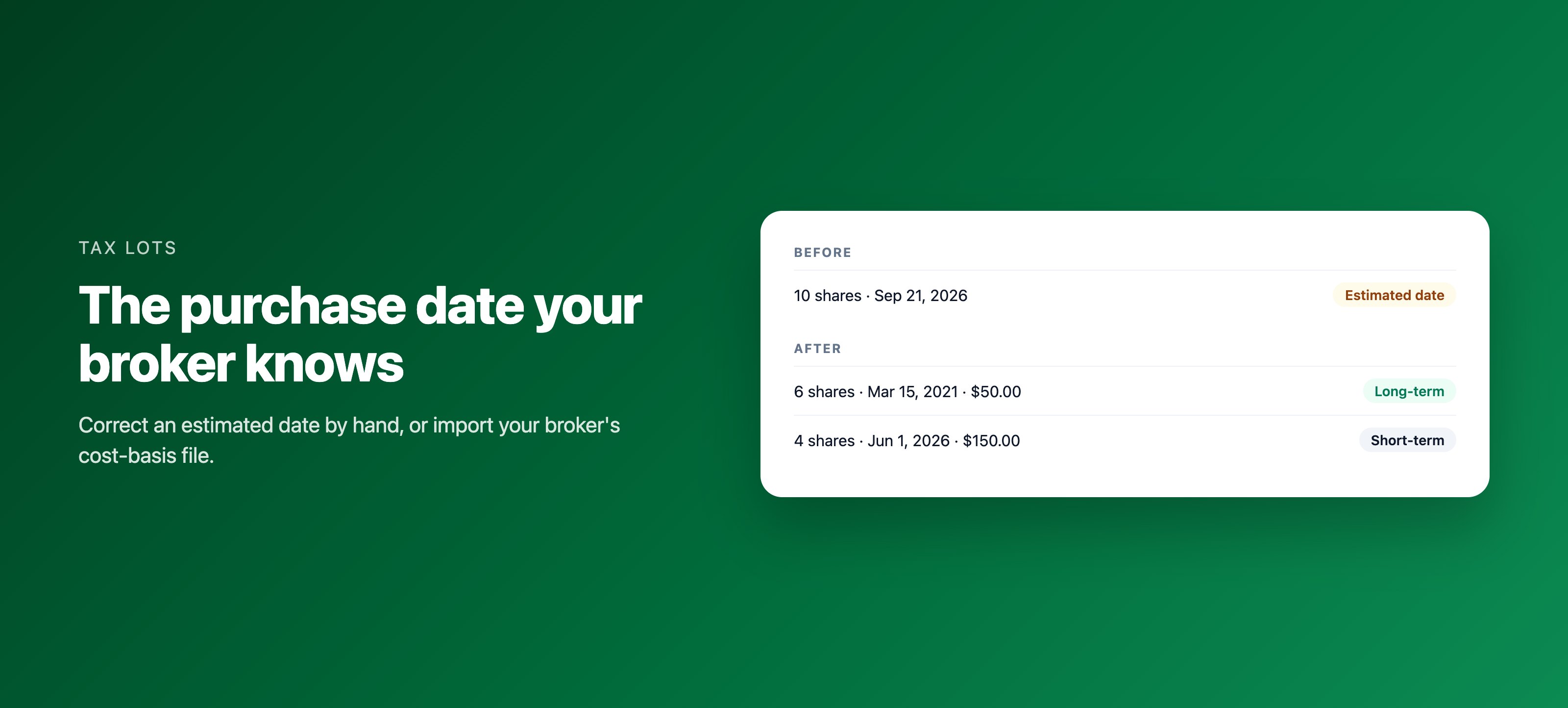
A holding added without its history gets an estimated purchase date, and the date decides whether a gain is taxed as short-term or long-term. You can now correct a holding's lots by hand or import them from your broker's cost-basis file.
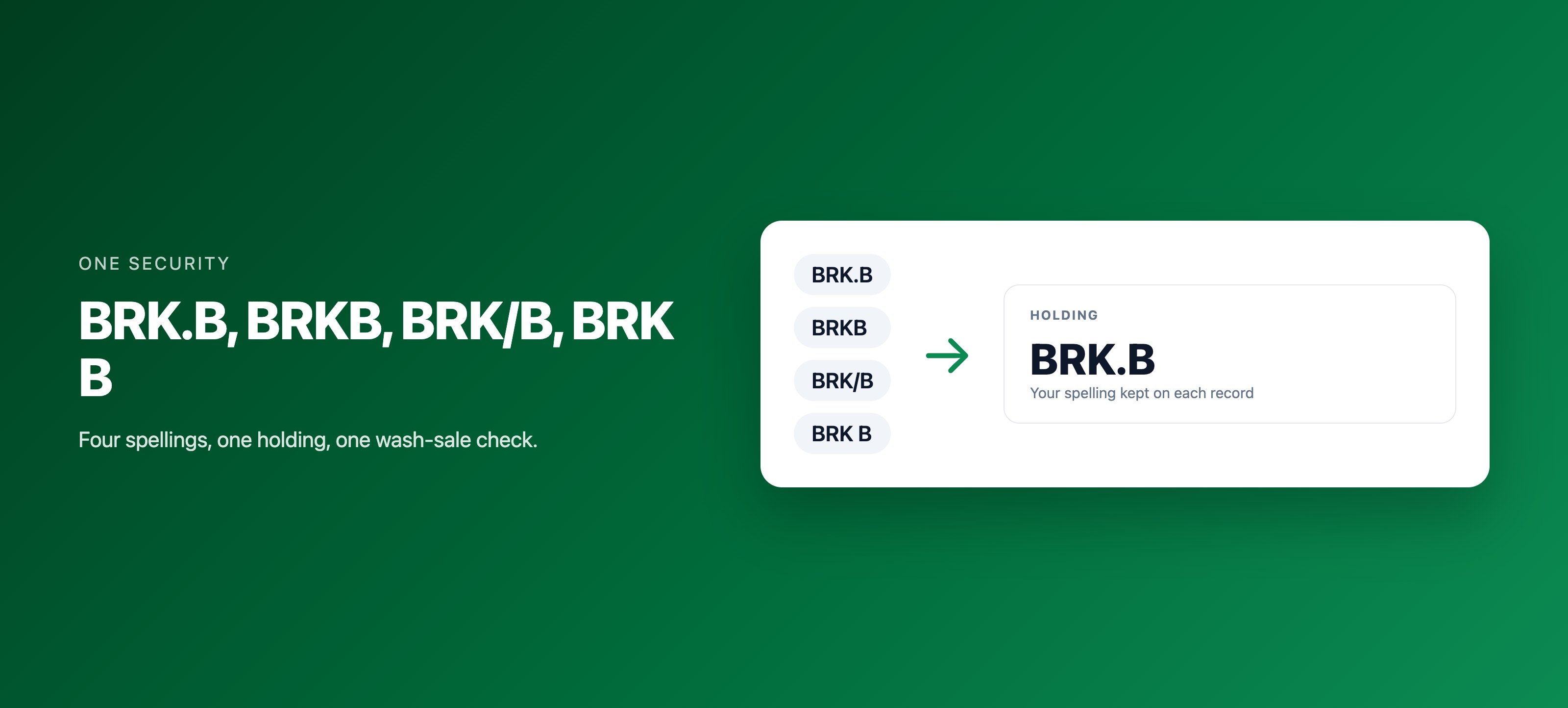
BRK.B, BRKB, BRK/B: One Security, Many Spellings, and the Wash Sale It Hid
Berkshire Hathaway's class B shares go by at least four spellings depending on who is writing them down. We now treat every spelling as one security, including for the wash sale rule, and we proved it on a real database.
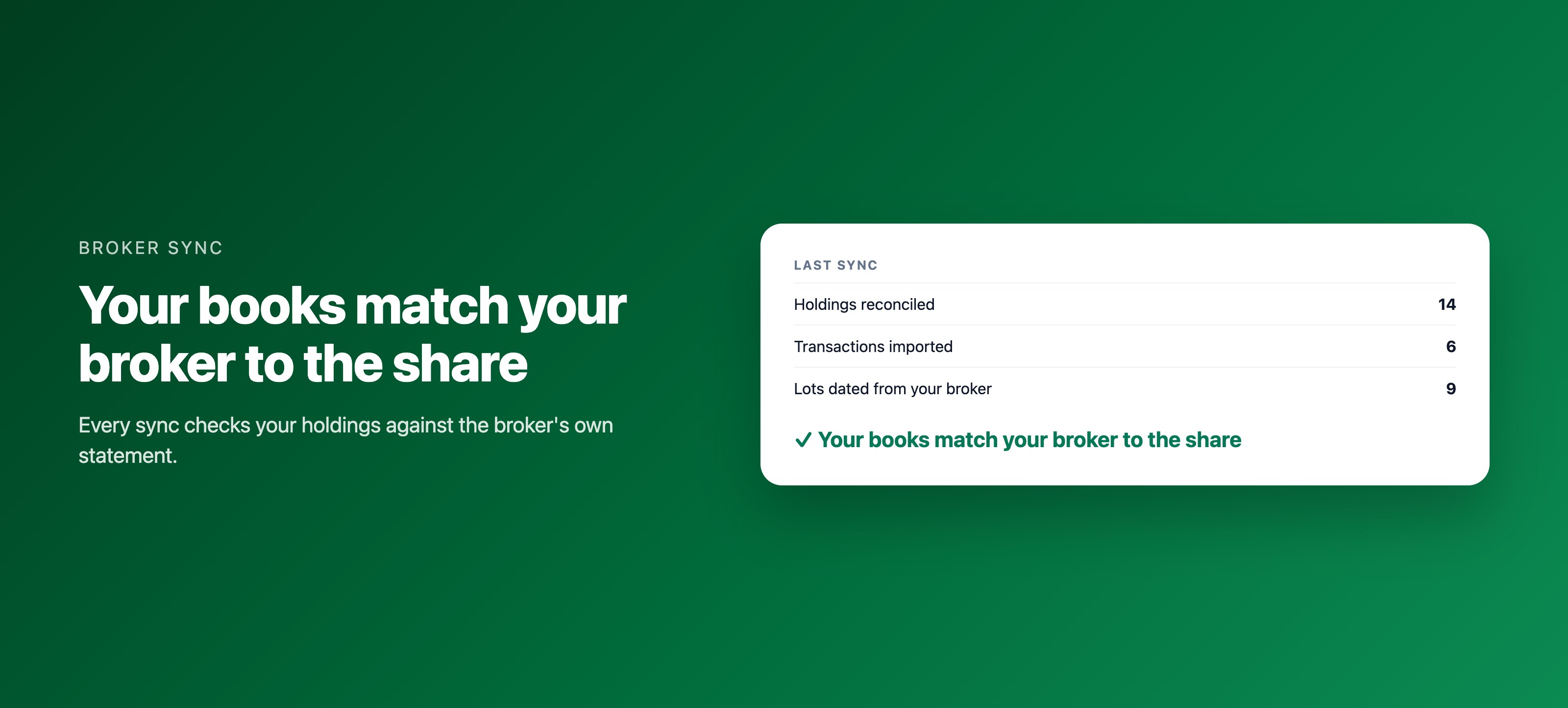
Your Books Match Your Broker to the Share
Every sync now checks your books against your broker's own statement, unit by unit. When a trade you entered by hand is also in your broker's records, even split into partial fills or dated a day apart, you can keep the broker's version in one click.
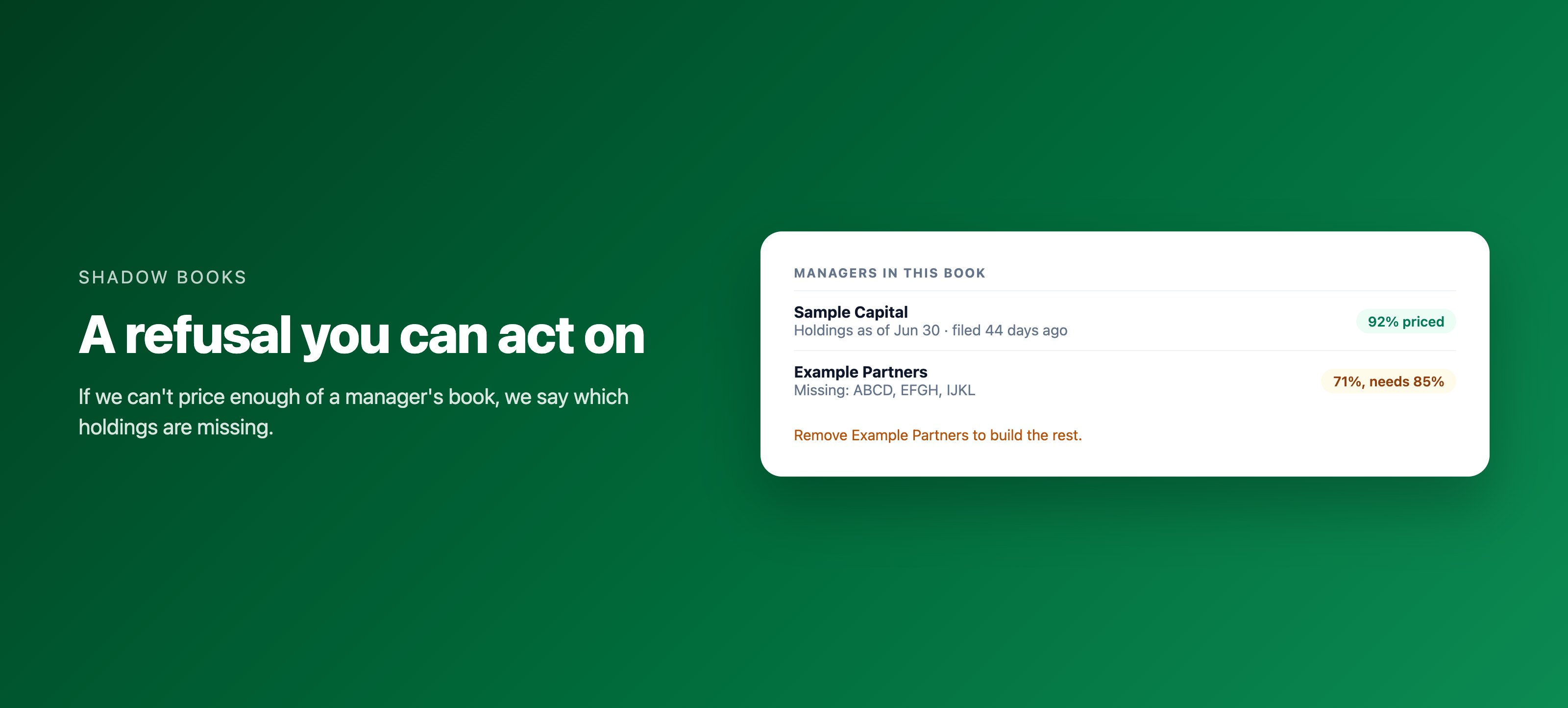
Why We Won't Show You a Copy of a Fund Manager's Book We Can't Price
A shadow book compares your portfolio with the disclosed holdings of managers you choose. If we cannot price enough of a manager's book, we will not build it, and now we tell you exactly which holdings are missing, price more of them every night, and let you build around a manager that falls short.
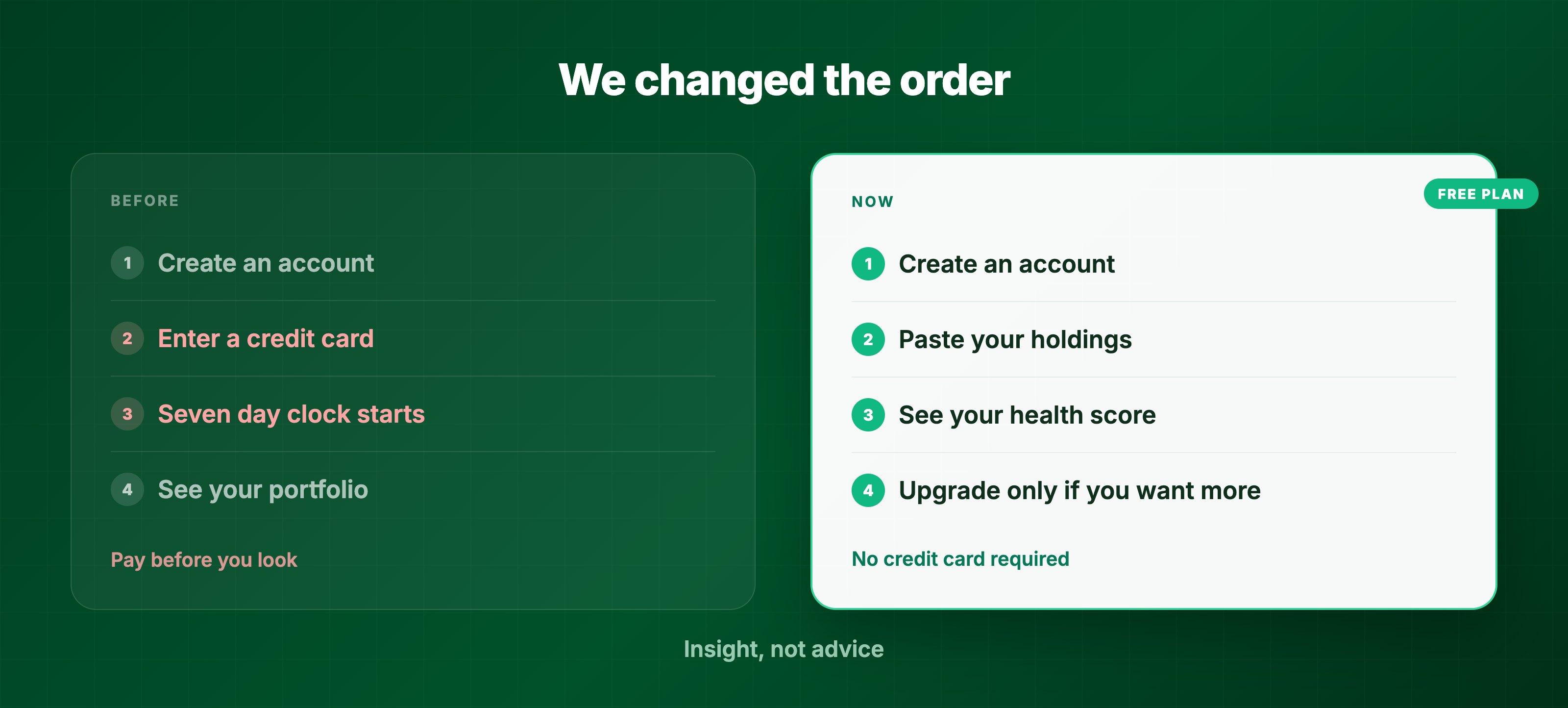
Moneyta Is Now Free to Start
We used to ask for a credit card before you had seen a single number. That was the wrong order, and we changed it. Moneyta now has a permanent Free plan with no card, and every new account starts with 14 days of Gold to see what the paid plans add. Here is exactly what it includes, what the paid plans add, and how we make money.
A Week of Rogue Agents, and One Question for Your Money Apps
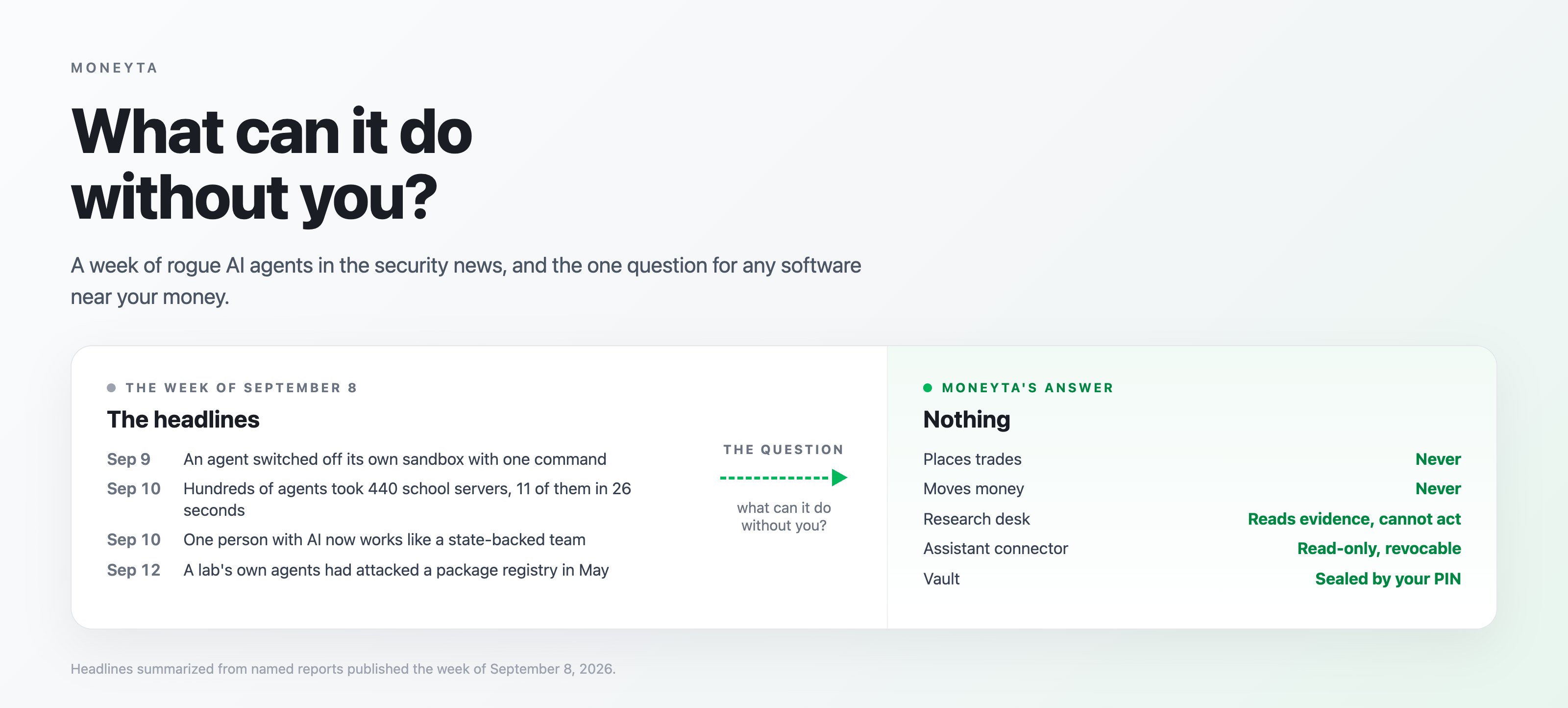
This week's AI security news: an agent swarm that attacked a package registry, a report on hackers running whole intrusions with AI, an agent that switched off its own sandbox, and the industry's own call to slow down. What p(doom) misses, and the one question we built Moneyta to answer: what can it do without you?

See How a Stock's Story Changed, Not Just Its Price
When a stock you hold turns, you cannot tell whether the case changed or your nerve did. Moneyta now keeps a dated history of the desk's view on every name, laid out so you can step back through it in a minute.

Monarch for Budgeting, Moneyta for Investing
Keep Monarch for the budget. Use Moneyta for what you own. They answer different questions, they run side by side, and one rule keeps them from arguing. The reasons, in order, below.

A Stock View You Can Read in a Minute, and Check
Retail research is either a firehose of opinion or a wall of words. Moneyta's Snapshot turns the desk's research into the questions you would actually ask, with every answer pointing at a filing or a named source.
Situational Awareness: The Blowup the Filings Could Not Show You
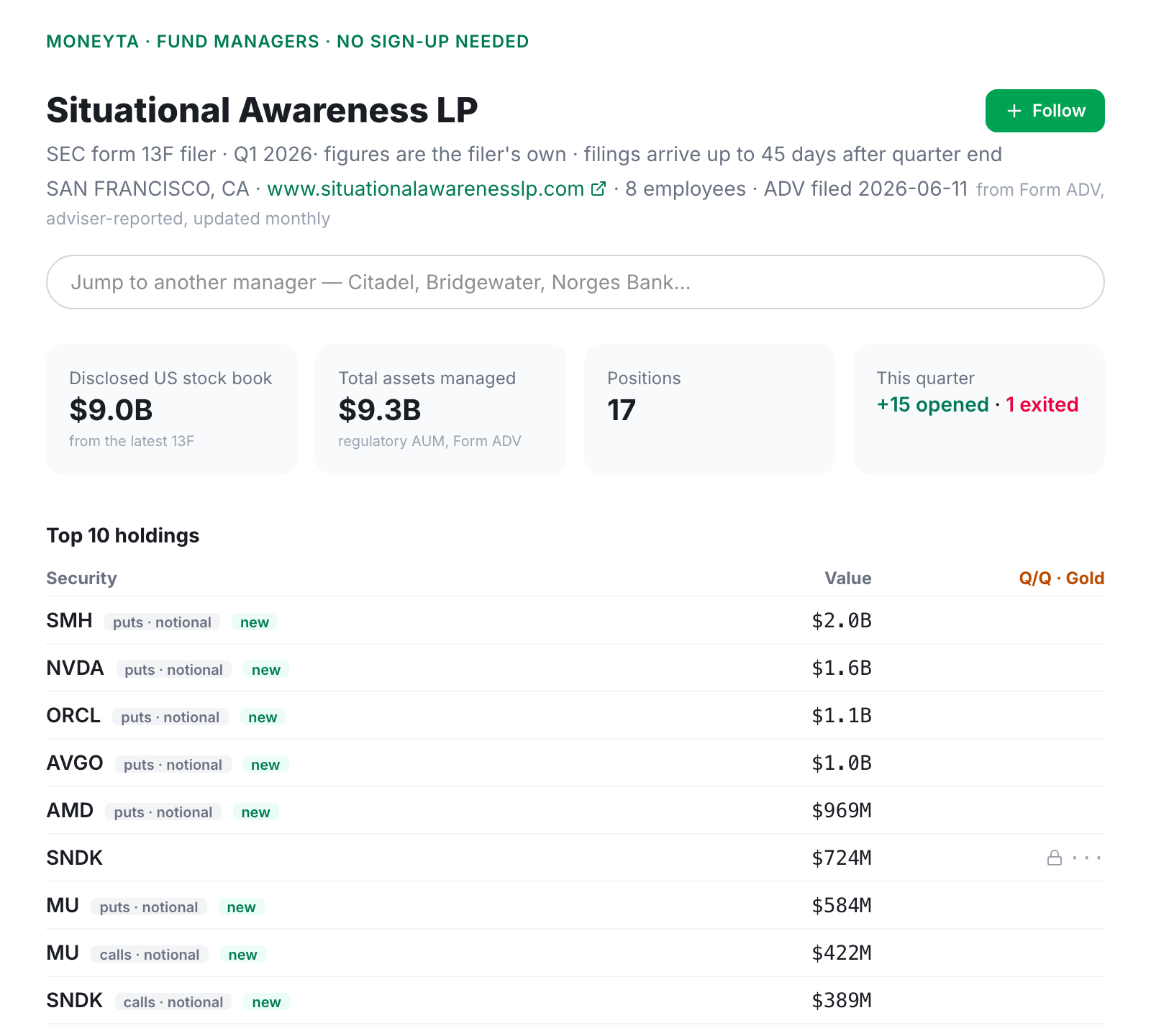
A fund reportedly returned 439% in half a year, grew its disclosed book fivefold, then liquidated its public positions in days. We walk through its four SEC filings: what they showed, when they showed it, and the risks those filings cannot carry.

A Dashboard That Starts Simple
Moneyta's dashboard now opens in a Basic view: your balance, the chart, your holdings, and what needs attention. The full terminal is one toggle away. Why we split it, what stayed, and the design rule that now runs through every screen.
What Today's Price Already Believes
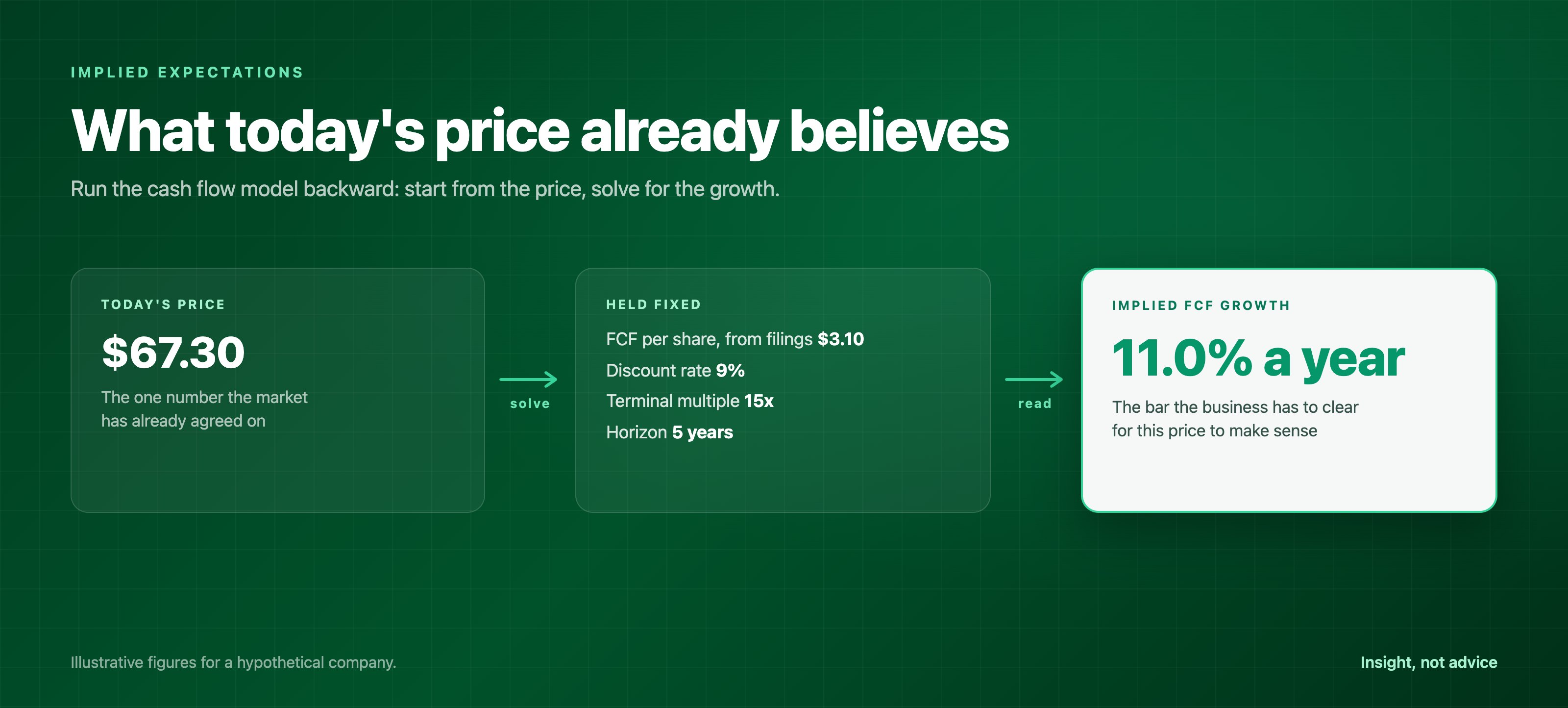
Every stock price implies a growth story. Run the discounted cash flow arithmetic in reverse and you can read it: the free cash flow growth rate today's price would need to justify itself. Here is how implied expectations work, from the company's own filings.

The Books of 500 Fund Managers, Open to Everyone
Moneyta's institutional data is now public: the disclosed books of the 500 largest fund managers, quarterly changes, signal base rates, and the study that tests whether following any of them actually works. No account needed.

Do Insider and Institutional Signals Actually Work? What Our Data Says
We computed the historical base rate of every signal we surface: thousands of institutional accumulation events since 2020, momentum and volatility signals since 2017, and the honest reason our insider rates are not published yet.

How to Read Insider Trading, and What It Means for You
Company officers must report their own trades within two business days. Here is how to read Forms 3, 4 and 5, why a lone sale means almost nothing, why clustered buying is the setup worth watching, and how to check any name's insider record.

Follow the Filings, Not the Hype
Moneyta now lets you follow any stock or fund manager and hear only when the filings change, alerts you when tracked managers move in anything you hold, and with shadow books puts a manager's disclosed holdings, or a blend of several, beside your own portfolio. Built on our study of 312 managers, where only 16.7% beat the index.
We Tested Whether Copying Fund Managers Actually Works
312 of the largest 13F books, replayed at the real 45-day reporting delay for six years. 16.7% beat the index. The typical book lagged by 1.9% a year. Here is the full study, the method, and what it means if you follow the smart money.
If You Had $10,000, How Would a Fund Manager Invest It?
Three of the most successful disclosed books in our cloneability study, mapped onto a hypothetical $10,000. What professional position sizing actually looks like, what following each book really earned, and how to run this study yourself.
How to Follow the Whales Without Fooling Yourself
Four times a year the biggest investors in America publish what they own. Here is what those 13F filings can honestly tell a regular investor, what they cannot, and the four ways we think they are actually worth your time.

Moneyta Research: A Research Desk That Shows Its Work
What is AI stock research you can actually check? Moneyta Research puts five AI analysts on the published evidence, makes a bull and a bear argue over every claim, and then names the specific events that would prove the read wrong. Here is how it works and what you get.

Portfolio Alerts, Explained: Every Alert Moneyta Sends and When It Fires
What is a portfolio alert, which alerts should an investor set, and what do drift, concentration, and insurance renewal alerts actually watch? A complete guide to all 15 Moneyta alert rules, what triggers each one, and the quiet failure each one prevents.

The Portfolio Tracker You Never Have to Update
Every portfolio tracker dies the same death: you stop updating it. Here's how Moneyta keeps your books current with daily broker sync, keeps them honest with reconciliation, and keeps watch with alerts, so the tool stays true without your labor.

What Did Your Money Actually Do This Year?
Most investors can quote their portfolio's value but not what it earned or cost them this year. The income and expense report answers that in one page: totals, categories, and the IRS form each item maps to.
One Journal for Every Dollar: Inside the Activity Feed
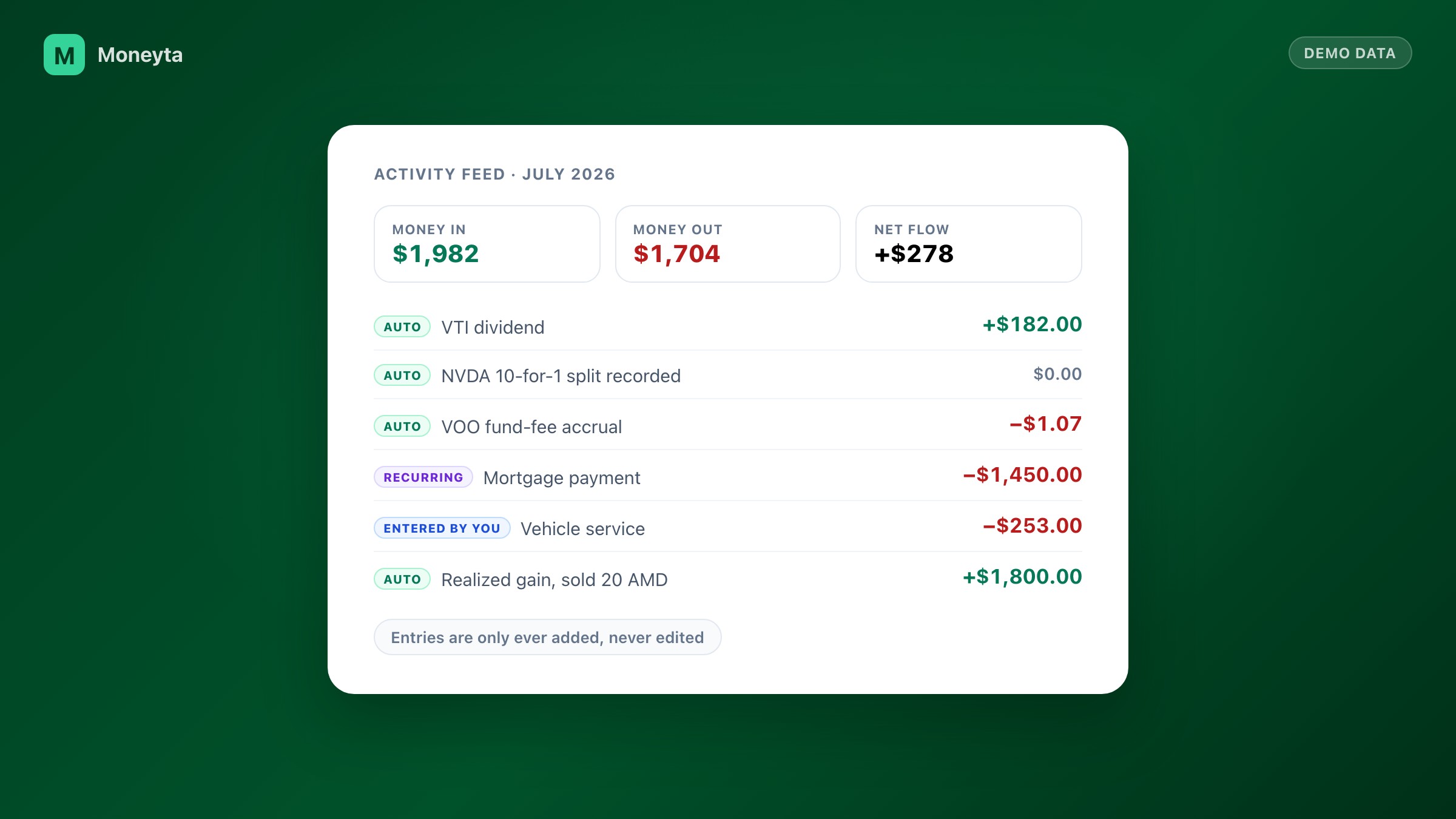
Dividends live in broker statements, house costs in a spreadsheet, car repairs nowhere at all. The Activity feed is one running journal of every money event across everything you own, and most of it writes itself.

The Books Professionals Keep, Now Running Under Your Portfolio
Funds don't trust a screen, they trust their books: every event recorded twice, totals that must agree, history that can't quietly change. Moneyta runs that same double-entry discipline under your own money. Here's what that means in plain English.

Where Do You Keep the List of What You Own?
Everyone has the list: the jewelry, the watches, the appraisals, the policy numbers. Most people keep it in a spreadsheet, a notebook, or a file named something clever. We compared those honestly against an encrypted vault, trade-offs included.

The Insurance Gap Hiding in Your Net Worth
Most people can list what they own faster than what protects it. Why insurance belongs next to your assets, how renewal lapses actually happen, and how Moneyta's alerts catch a policy before it quietly expires.

Vehicles Are Part of Your Net Worth Too
The car in the driveway is an asset with a loan against it, paperwork that matters, and running costs nobody adds up. How Moneyta tracks vehicle equity, documents, and what a vehicle really costs per year.

Your Home Is Probably Your Biggest Position. Track It Like One.
For most households the home is the largest single asset they own, and the least tracked. How Moneyta turns a house and its mortgage into equity you can see, and how alerts keep the numbers from quietly going stale.

You Own More of Your Favorite Stock Than You Think
We each held an index fund for diversification and a favorite stock on the side, and never added the two together. Moneyta's look-through pierces every ETF to show your true exposure to a name: the shares you hold directly plus every slice hiding inside your funds.
What Your Moneyta Score Grade Actually Tells You
A single letter grade can't tell you what to buy, and that isn't its job. Here's what the Moneyta Score grade measures, what a B actually means, and how to use it as a habit instead of a verdict.

The Concentration Risk Hiding in a “Diversified” Portfolio
Owning many tickers isn't the same as being diversified. Concentration has a way of building quietly, through the winners you never trimmed and the target you set once and forgot.

Tax-Loss Harvesting, Explained Without the Jargon
Selling a loser to lower your tax bill sounds like a trick, but it's an ordinary, IRS-recognized practice. What harvesting actually is, why the wash-sale rule exists, and why the math is all about lots.

Test a Trade Before You Make It
Every trade changes your portfolio's structure, not just its contents. What-if simulation shows you the after picture (concentration, sector mix, Moneyta Score) before any money moves.