
The Concentration Risk Hiding in a “Diversified” Portfolio
Owning many tickers isn't the same as being diversified. Concentration has a way of building quietly, through the winners you never trimmed and the target you set once and forgot.

The first portfolio we ran through Moneyta was one of our own, and it flunked the concentration check in a way none of us saw coming. Ask most people if they're diversified and they'll count their tickers. Ten holdings? Diversified. But concentration isn't about how many things you own. It's about how much of your money rides on any single outcome, and it has a way of hiding in portfolios that look perfectly balanced on the surface.
The position that grew into a problem
Nobody sets out to put 29% of their portfolio in one stock. It happens by winning: you buy a position at 10% of your portfolio, it triples while the rest merely keeps up, and suddenly it's nearly a third of everything you own. The demo portfolio above is a textbook case: one holding at 28.8%, built not by a decision but by drift.
This is the paradox of concentration risk: it's usually your best performer. Trimming it feels like punishing success, so most people don't, right up until the position that made the portfolio is big enough to break it. There's no universally right answer, but there is a right question: if this one holding fell 40%, would the damage be acceptable to you?
Drift: the quiet undoing of a good plan
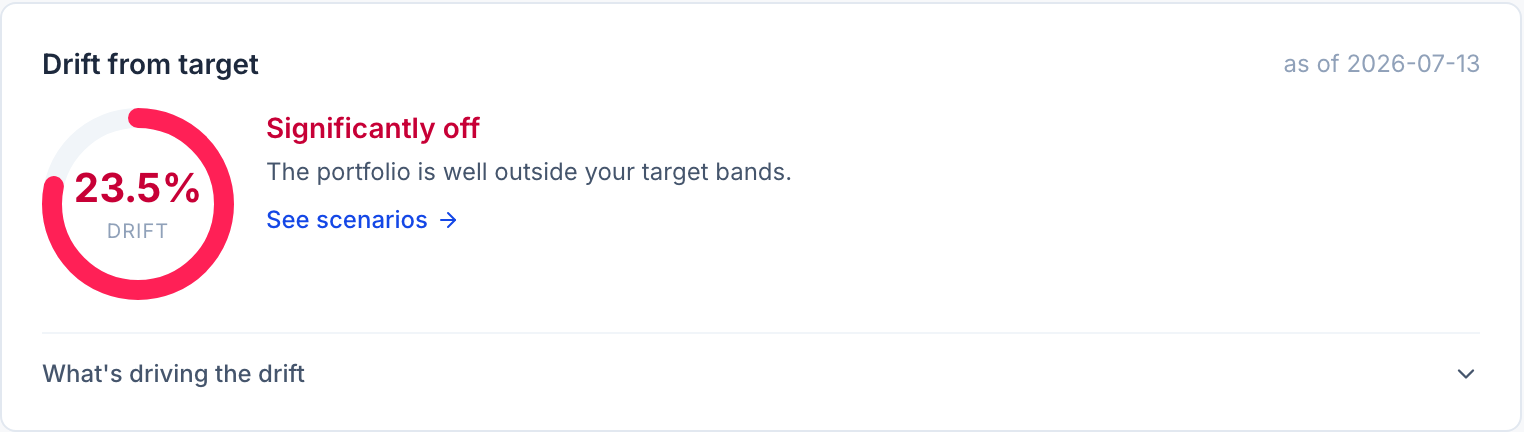
Concentration is rarely a single dramatic event. It's the compound interest of not looking: winners grow, losers shrink, and the allocation you chose two years ago quietly becomes an allocation you never would have picked. Measuring drift against a target you set is how you catch it while it's still a small correction instead of a hard decision. (And if the same names keep showing up across your funds, that's a second kind of concentration worth its own look.)
Check your portfolio for hidden concentration
Start free