
What Your Moneyta Score Grade Actually Tells You
A single letter grade can't tell you what to buy, and that isn't its job. Here's what the Moneyta Score grade measures, what a B actually means, and how to use it as a habit instead of a verdict.

The first time we graded one of our own portfolios, it came back a B, and we were a little insulted. Then we read why. Your broker tells you what your portfolio is worth. Almost nothing in the retail toolkit tells you how it's built, and that's the gap the Moneyta Score grade fills: one number, refreshed as your holdings and the market move, that summarizes the structure of what you own, not its performance.
The distinction matters. A portfolio can be up 30% on the year and still be structurally fragile: one stock doing all the work, three funds that are secretly the same bet, a cash pile earning nothing. Performance tells you what happened. Structure tells you how exposed you are to what happens next.
What goes into the score
A Moneyta Score looks at how well-balanced your holdings are across a handful of structural factors: how spread out your investments are, how heavily you're concentrated in any single stock or sector, and the overall mix of asset types you hold. It's a measure of construction, not a prediction of returns.

A B is not a scolding
Here's the demo portfolio from the screenshots in this post: 69 out of 100, a B, "Generally healthy." That's not a failing report card. It's a structurally reasonable portfolio with a few things worth knowing about. The grade's real value is in the observations behind it, which name the specific things dragging the number down.
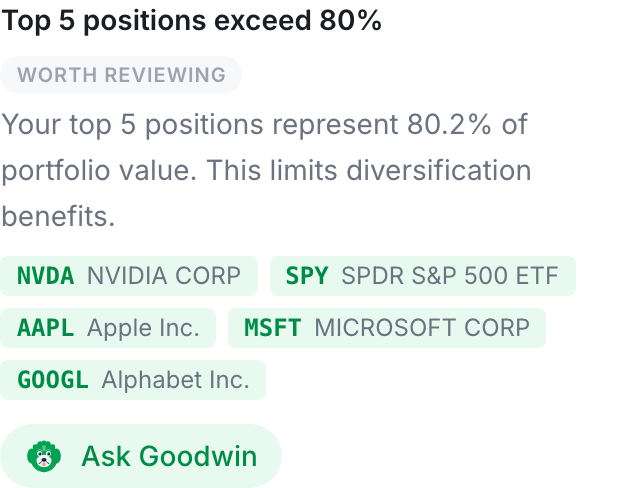
In this case, the top five positions make up just over 80% of the portfolio's value. Is that bad? It depends on you: a conviction investor might shrug, someone near retirement might not. The point of the grade isn't to tell you which one you are. It's to make sure you're choosing that concentration on purpose rather than discovering it later.
Use it as a habit, not a verdict
- Check the grade after you add money or make a trade, since structure shifts when you do.
- Read the observations, not just the number. The number gets your attention; the observations tell you where to look.
- Watch the trend. A grade drifting from A to C over months is a more useful signal than any single reading.
See your own portfolio's Moneyta Score grade
Start freeEvery new account starts with 14 days of Gold: every feature on, no card. Then Free, unless you choose a plan.