
The Purchase Date Your Broker Knows
A holding added without its history gets an estimated purchase date, and the date decides whether a gain is taxed as short-term or long-term. You can now correct a holding's lots by hand or import them from your broker's cost-basis file.
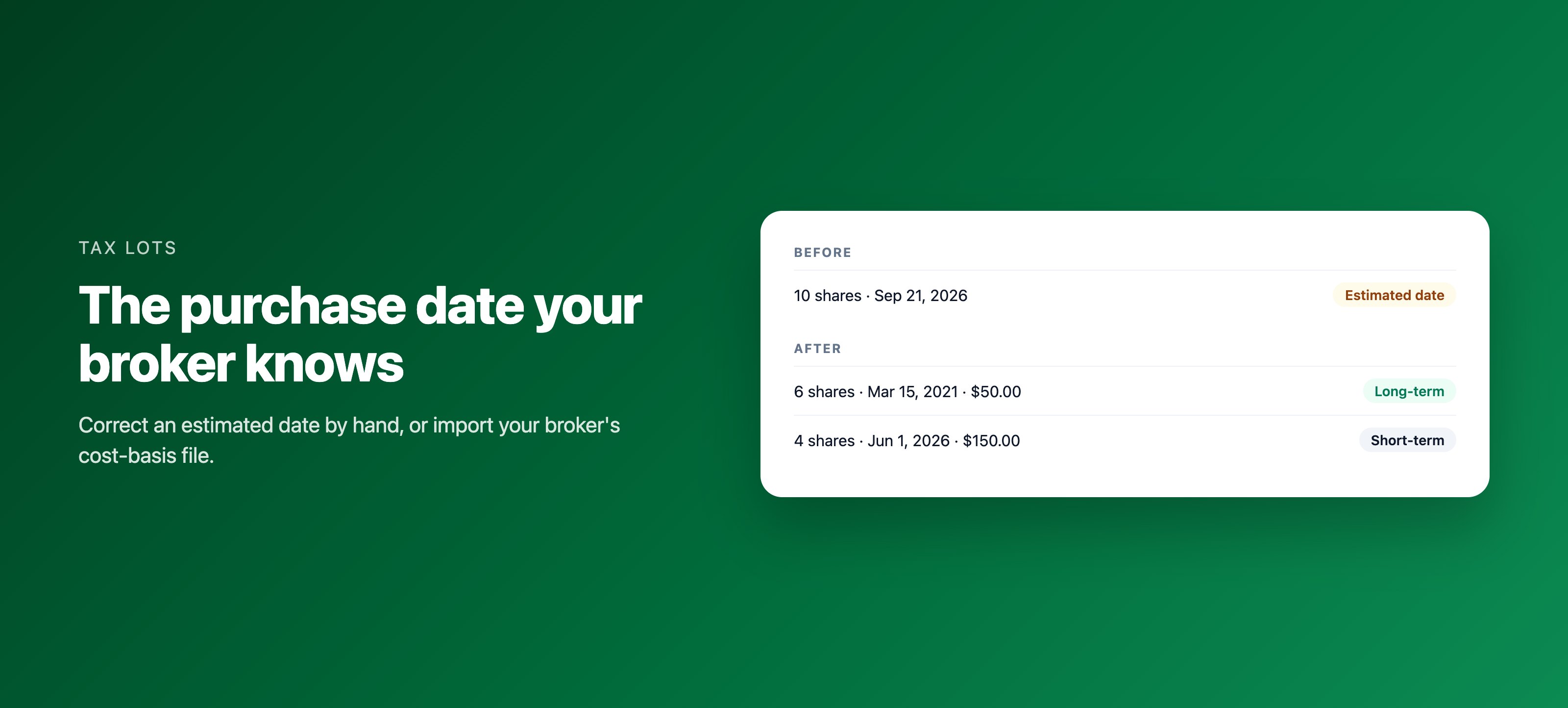
When you paste in holdings or connect a broker that shares only positions, we know how many shares you own and what you paid on average. We do not know when you bought them. So the lot is dated the day it arrived and marked estimated, and its term is shown as unknown rather than guessed.
That date matters more than it looks. A gain on shares held for more than a year is taxed as long-term, often at a lower rate. An estimated date makes every lot look recent.
Correct it by hand
Open a holding's lots and choose to correct dates or basis. Set each lot's purchase date and cost per share as your statement shows them, split a lot when part was bought on another day, and say in a few words why. The lots must add up to the shares you hold, because a correction changes dates and basis, never how many shares you own.
Or import your broker's file
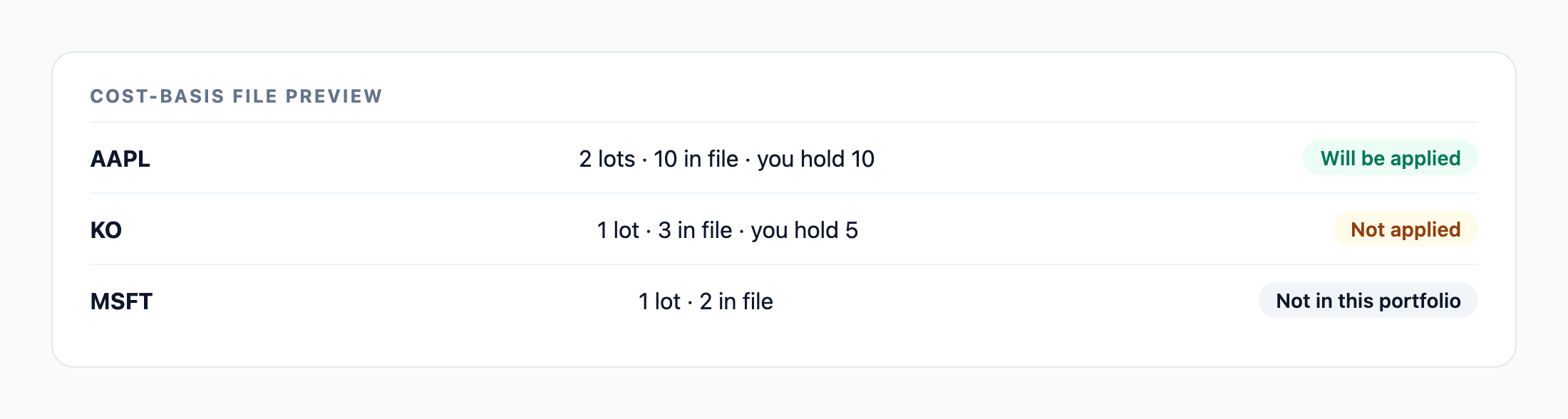
Most brokers offer a positions or cost-basis export with a date acquired for each lot. Upload it and we show a preview first: for each holding, how many lots the file has, and whether they add up to what you hold. Only the ones that do are applied. A file with several accounts asks which one is this portfolio.
Your earlier entries stay in your history, and the correction sits on top with its reason. Sales from then on use the corrected lots.