
When a Manager You Follow Trades a Stock You Own
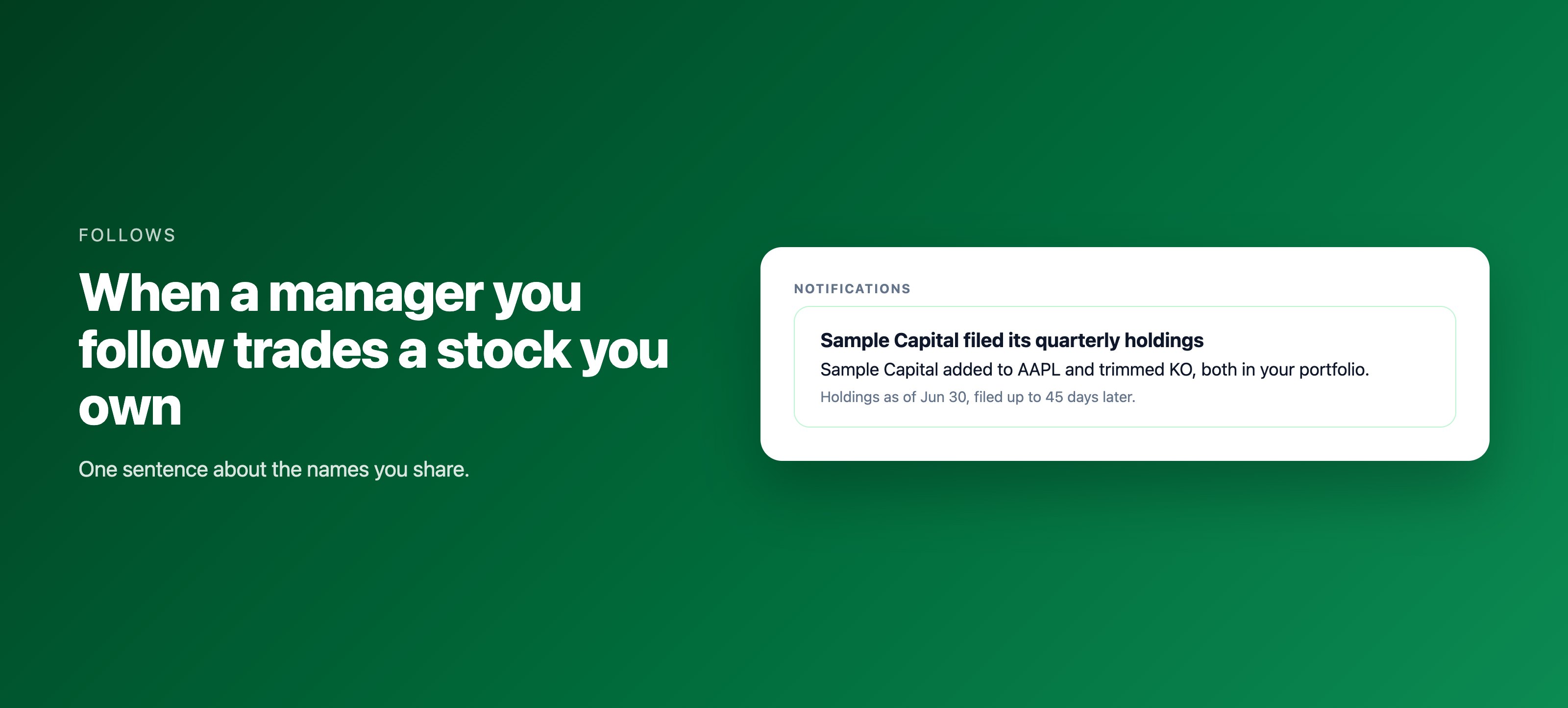
Following a fund manager used to tell you they filed. Now it tells you what they did with the stocks you hold, in one sentence, and your follows page shows which of your holdings each manager owns.
Large investment managers report their stock holdings to the SEC every quarter, and anyone can read them. The interesting part for you is rarely the whole list. It is the handful of names you both own, and what they just did with them.
What the note says
Before, a follow told you a manager had filed, with a count of new positions and exits. Now, when that filing touched your own holdings, the note says so in one line: which names, and whether the manager bought, added to, trimmed or sold out of each. If the filing did not touch anything you own, you still get the plain filing note.
Your follows page now shows, next to each manager, the holdings of yours in its latest filing, and what that filing did with them.
Read it with the lag in mind
These filings arrive up to 45 days after the quarter they describe. A position that shows as added may have been added two months ago and sold since. The filings also leave things out: short positions, most derivatives, cash, anything outside US-listed stocks. So a move is a fact about the past, not a signal about tomorrow. We say that on every note because it is the most common way people fool themselves with this data.
RelatedHow to follow managers without fooling yourself