Learn · walkthrough
Read a Company's Insider Activity
Published · 7 min read
When a company's officers and directors trade their own stock, they file it with the SEC on Forms 3, 4 and 5, usually within two business days. That is some of the freshest public information that exists about a company. It is also some of the easiest to misread. Moneyta's Insiders tab structures those filings so the signal and the noise separate on sight. This walkthrough uses TSM, which had a busy insider spring; any covered ticker works. The tab is part of the Gold plan.
Step 1: open the tab
Open any ticker in Research and click Insiders in the dock (1). The panel leads with four tiles (2) that net the trailing 180 days: open-market dollars bought and sold, net shares, and how many distinct people were buying. Read the tiles as a pair: on this capture, insiders bought $1.5M and sold $14.0M, so the headline story is net selling, with a genuine cluster of buyers inside it.
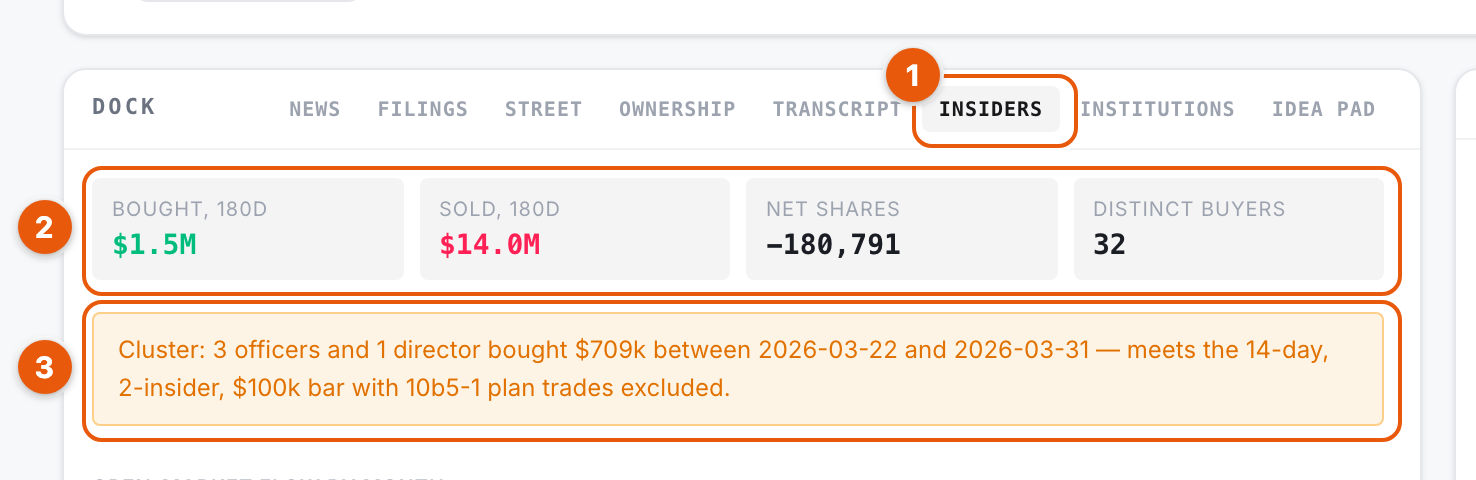
The cluster callout (3) is the panel's strongest sentence. It fires only when a strict bar is met: at least two distinct insiders bought in the open market within 14 days, at least $100k combined, with planned 10b5-1 purchases excluded. Clustered discretionary buying is the setup the research literature finds most informative, which is why it gets a sentence instead of a footnote. The same bar feeds the conviction screen.
Step 2: read the transaction rows
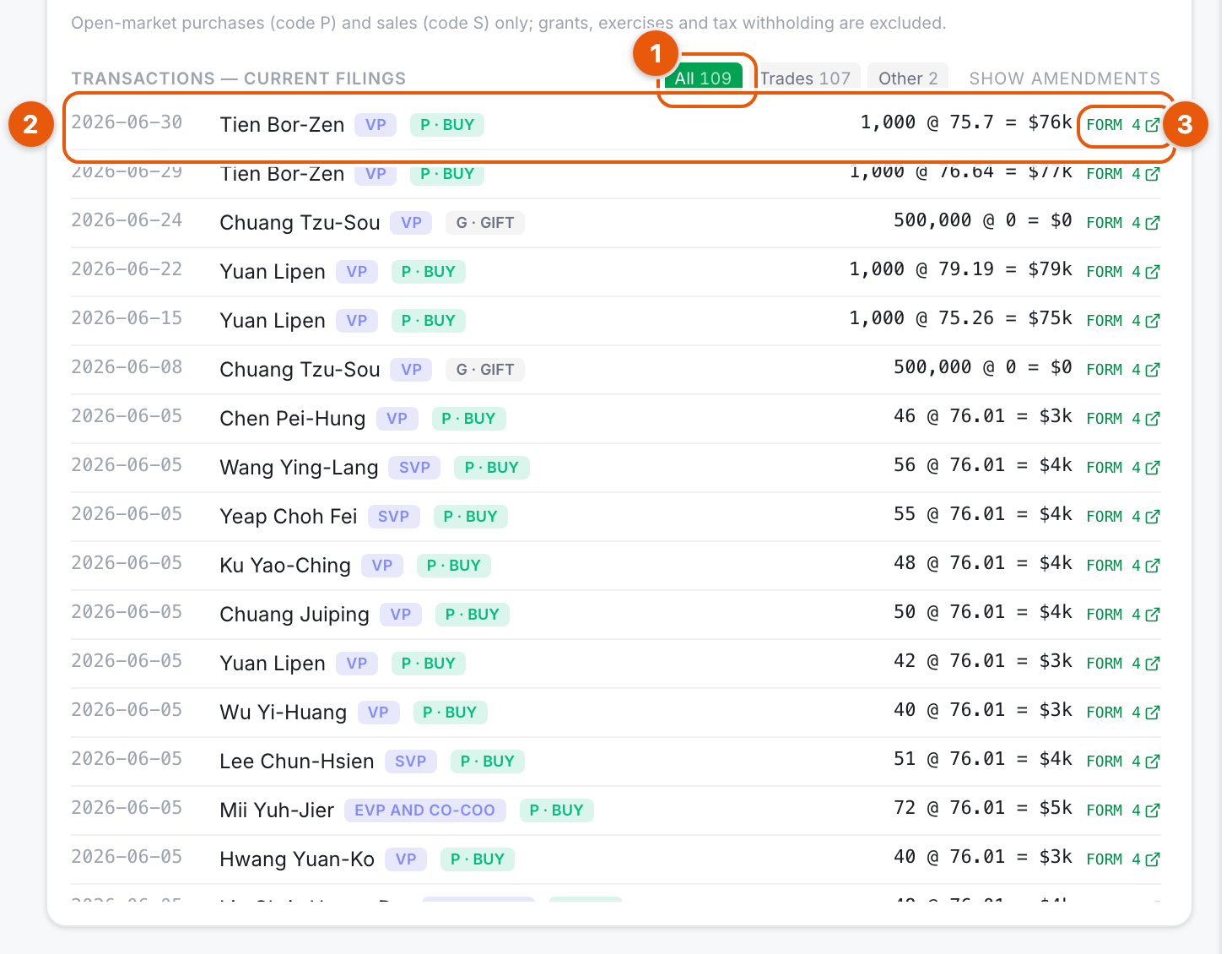
Scroll past the monthly flow chart to the transactions list. The filter pills (1) split the feed: Trades keeps open-market buys and sells, Comp & grants collects option exercises and stock awards, Other holds the rest. Each row (2) is one reported transaction: date, the person and their role, a plain-word code badge, and shares at price with the resulting dollar value. The Form 4 link (3) opens the actual SEC filing, so every row is one click from its primary source.
How to read the codes
- P · buy is an open-market purchase with the insider's own money. This is the code that means conviction.
- S · sell is an open-market sale. Sales carry less information than buys: people sell for taxes, houses and diversification, but they buy for one reason.
- G · gift, grants, exercises and tax withholding are compensation plumbing, not market opinions. The flow chart and the summary tiles exclude them so the totals reflect real trades only.
- A 10b5-1 badge marks trades made under a plan scheduled months in advance. They tell you almost nothing about what the insider thinks today, which is why they are excluded from the cluster test.
Two more honest details: the "show amendments" toggle reveals superseded filings instead of silently merging them, and the reported holdings section below the list shows each insider's latest position, direct and indirect. The footer states a rule the summary already applied: 10% owners and entity purchases are shown but never counted toward the officer cluster.
The reading habit
Tiles first, for the 180-day net. Cluster callout second, because clustered discretionary buying is the only insider pattern with a strong pedigree. Rows last, with the code badges deciding what deserves attention. And when the panel says there are no filings in the trailing window, that is the finding, not a gap. Insider filings are stored from 2026 onward, so the tab's history, and the base rates built on it, deepen every night. Educational analysis of published data. Insight, not advice.