Learn · walkthrough
Run the Conviction Screen
Published · 6 min read
The conviction screen lists stocks where two groups with unusually good information, company insiders and large institutions, moved toward the same name at the same time, in two independent regulatory disclosures. What qualifies and what gets excluded is covered in How the Conviction Screen Works. This walkthrough is the practical half: getting to the screen, reading a row, and knowing what to do with what you find. The screen is part of the Gold plan.
Step 1: find the screen
From the app sidebar open Research. The pulse strip at the top of the research landing reports what fund managers last filed; the conviction screen tile (1) shows how many names currently co-fire. Click through it, or navigate to Research → Institutions → Conviction screen.

Step 2: read the evidence chips first
Before the table, the screen shows evidence chips (1), one per leg of the setup. Each chip links to the signal's evidence page and states its current base rate, or admits the history is still accruing. Reading the chips first sets your expectations: if the institutional leg's median is negative, a row on this screen is a shortlist entry, not a verdict.
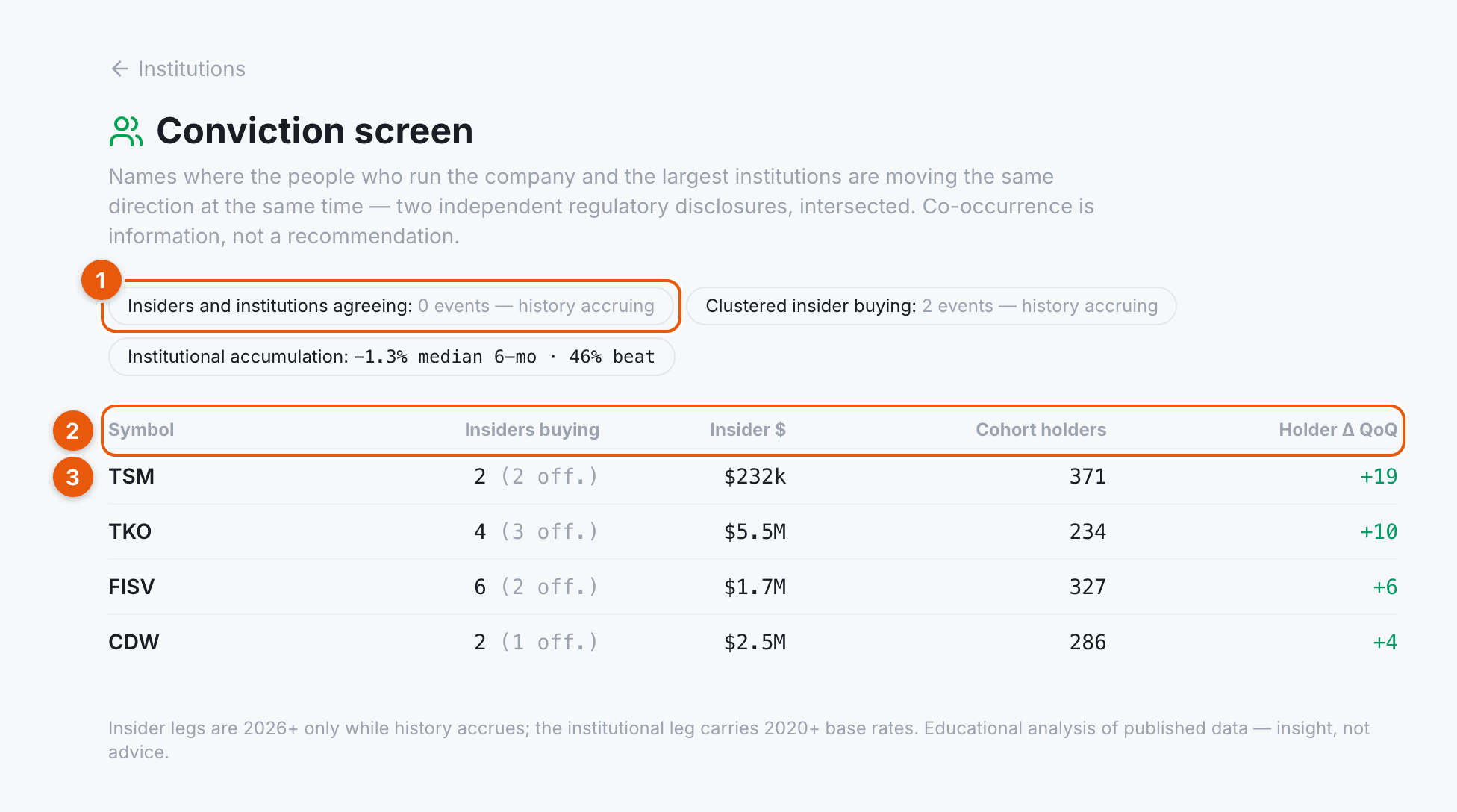
Step 3: read a row
- Insiders buying counts distinct people, with officers broken out. Two officers buying independently is the signal literature's strongest insider setup; a lone 10% owner is not counted toward the cluster.
- Insider $ is the open-market dollars they spent. Planned 10b5-1 purchases, grants and exercises are excluded, so this is discretionary money only.
- Cohort holders is how many top-500 filers held the name at the latest quarter, and Holder Δ QoQ is the change in that count. A positive delta is the institutional leg firing.
Step 4: know what an empty screen means
Most weeks the screen is short, and some weeks it is empty. The empty state says so in as many words: no names co-fire right now, and an empty screen is honest. A screen that always shows rows would be manufacturing conviction, which is the opposite of measuring it. The footer carries the other caveat worth remembering: insider legs are 2026+ only while filing history accrues, so the intersection is young even where the institutional leg carries 2020+ base rates.
What to do with a hit
A row on this screen is a reason to do the ten-minute homework, not a reason to trade. Open the ticker's Insiders tab to see who bought and on which forms, check the evidence pages for what this setup historically delivered, and read the desk report if one exists. Co-occurrence is information, not a recommendation. Educational analysis of published data. Insight, not advice.